
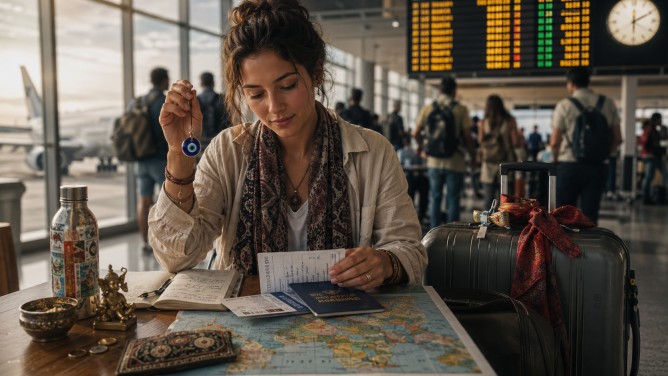
Travel is often steeped in traditions and rituals that imbue the journey with a sense of specialness and anticipation. Across various cultures, travelers adhere to unique beliefs intended to summon good luck and offer protection during their travels. These customs, though lacking scientific backing, remain a fascinating aspect of travel culture, celebrating family traditions and cultural identities.
In the Balkans, for instance, a clove of garlic is seen as a talisman against negative energy and the evil eye. Some travelers place a clove inside their luggage, hoping it shields them from misfortune on their journey. Similarly, the practice of touching or tapping the exterior of an aircraft before boarding is a ritual embraced by many flyers. This gesture is believed to bring good luck and provides comfort, especially to those who feel anxious about flying. Stepping onto the plane with the right foot is another such practice, based on the idea that starting a trip “on the right foot” heralds good fortune.
Certain numbers are also avoided due to their perceived associations with bad luck. In Western countries, the number 13 is considered unlucky, while in China, the number 4 is often shunned because its pronunciation is similar to the word for death. In Italy, 17 is traditionally viewed as an unlucky number. These beliefs sometimes influence the choice of hotel room numbers, building floors, and other travel-related decisions.
Other superstitions involve actions taken before or after departure. In parts of the Middle East and the Balkans, families may pour or sprinkle water behind a departing traveler, symbolizing a smooth journey and a safe return. Meanwhile, a traditional Slavic custom involves sitting quietly on packed luggage for a brief moment before setting out, allowing travelers to collect their thoughts and mentally prepare for the journey ahead. Additionally, sweeping the floor immediately after someone leaves is considered unlucky in several cultures, as it is thought to symbolically sweep away the person’s good fortune and impact their safe return.
While these practices may not have scientific evidence to support their efficacy, they continue to be cherished by many as meaningful rituals that enhance the excitement and anticipation of travel. For those who observe them, these superstitions are as much about preserving cultural heritage as they are about embracing the adventure of embarking on a new journey.