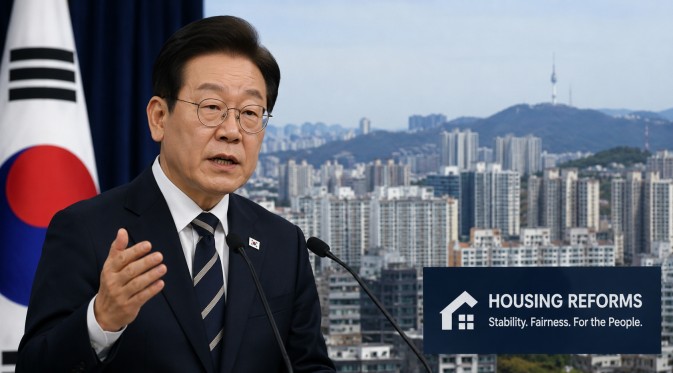
South Korean President Lee Jae Myung is pushing forward with significant housing reforms, highlighting the need to address a potential property bubble that could result in prolonged economic stagnation. During a policy forum, Lee emphasized the necessity of implementing measures such as increased property holding taxes, adjusted capital gains taxes, and more stringent mortgage lending regulations to curb speculation and stabilize the housing market. He drew parallels to Japan’s economic slowdown following its property bubble burst, underscoring the urgency of the situation.
Lee’s proposed strategy aims to shield single-home owners, lower-income households, and residents outside the capital from heavy tax burdens, while focusing on imposing higher taxes on multiple-home owners and those with high-value speculative properties. Additionally, he suggested implementing stricter controls on rental-deposit loans, but with exceptions for young people, newlyweds, and other vulnerable groups to ease their financial burdens.
The president stressed that these challenging reforms are crucial for South Korea’s long-term economic stability, acknowledging that the government may need to face political repercussions to avert a larger economic crisis. He remained firm in his commitment to these reforms, arguing that the potential political costs are necessary for the country’s future well-being.
As South Korea grapples with these housing market challenges, the government is set to release a more comprehensive real estate policy package later this month or in early August. Lee’s administration continues to focus on balancing economic stability with necessary reforms, aiming to prevent the adverse effects of unchecked property market speculation.