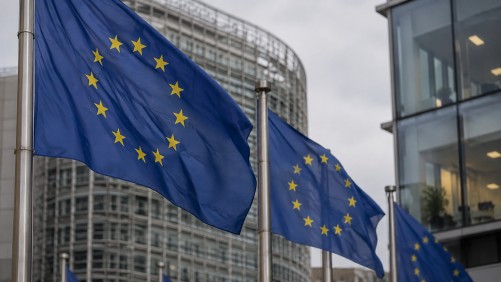
The European Union has decided to remove Russian billionaires Alisher Usmanov and Mikhail Fridman from its sanctions list, while continuing restrictions on approximately 3,000 other individuals and entities linked to Russia’s activities in Ukraine. The decision, which required unanimous agreement from all 27 EU member states, was finalized as the bloc extended its sanctions framework.
The removal of Usmanov and Fridman came after specific requests from France and Luxembourg, respectively. This move has sparked criticism from Ukraine, which remains opposed to lifting sanctions on the two businessmen known for their ties to Russia. Despite these removals, the EU has opted to extend its current sanctions for a more extended period of 36 months, deviating from the usual six-month renewal cycle, to bring more stability and predictability to its sanctions regime.
The EU’s sanctions list continues to target high-profile individuals, including Russian President Vladimir Putin and Foreign Minister Sergey Lavrov. It also maintains restrictions on senior officials, banks, energy companies, and entities connected to Russia’s defense sector. In addition, the EU is in the process of preparing further sanctions aimed at individuals and organizations associated with Russia’s military-industrial complex.
This development underscores the EU’s ongoing commitment to applying economic pressure on Russia while balancing internal member state interests. The extension of the sanctions framework reflects a strategic approach to maintaining cohesive and long-term pressure on Russia amid the ongoing conflict in Ukraine.