
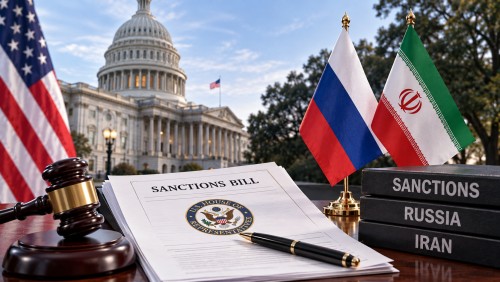
The U.S. House of Representatives has approved the Lindsey O. Graham Sanctioning Russia and Iran Act of 2026, a significant measure designed to intensify economic pressure on Russia and maintain sanctions on Iran. The bill, which passed with a 262-159 vote on September 16, now awaits consideration from President Donald Trump. The Senate had already given its approval in August.
This legislation aims to target key sectors of Russia’s economy, including government officials, financial institutions, and energy interests. It also seeks to curb the activities of the so-called shadow fleet, which is used to bypass existing sanctions. An additional provision allows for the imposition of tariffs up to 100% on goods from nations involved in purchasing Russian oil or gas or aiding in sanctions evasion.
Furthermore, the act extends the Iran Sanctions Act through 2031, introducing new constraints on financial and energy activities linked to Iran. These measures reflect ongoing concerns about Iran’s regional activities and nuclear ambitions.
Despite receiving bipartisan backing, some House members expressed dissent, particularly over elements that expand presidential powers concerning tariffs and sanctions. The bill’s passage marks a continued effort by U.S. lawmakers to exert economic influence as a tool of foreign policy, particularly in response to Russia’s ongoing conflict in Ukraine.