
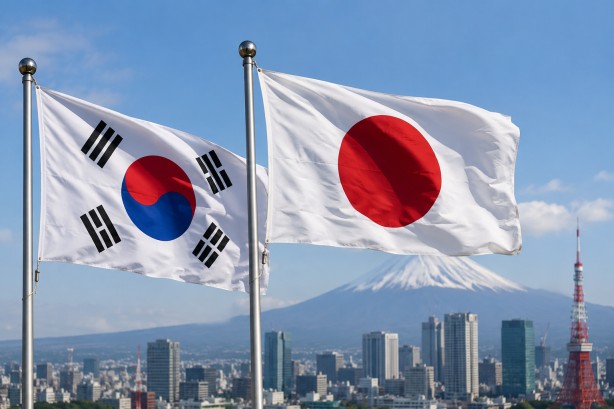
Japan’s shift towards a more conservative political stance under Prime Minister Sanae Takaichi is presenting new challenges for its relationship with South Korea. Concerns are mounting that this could strain historical and territorial disputes, potentially impacting recent diplomatic efforts between the two nations. Traditionally, South Korea and Japan have maintained a “two-track” strategy, distinguishing historical issues from areas that require collaboration, such as economic and security relations. However, a recent evaluation by South Korea’s Institute for National Security Strategy indicates that Japan’s political instability and rightward shift might hinder progress in their bilateral diplomacy.
Recent developments have brought tensions back into focus. Visits by Japanese politicians to the Yasukuni Shrine, a site considered controversial, and Japan’s assertion of territorial claims over Dokdo—which is controlled by South Korea but referred to as Takeshima by Japan—have rekindled old disputes. Although Prime Minister Takaichi refrained from visiting the shrine on August 15, the anniversary of Japan’s World War II surrender, she sent a ritual offering. This action, coupled with visits from several senior Japanese officials, prompted formal protests from the South Korean government.
Despite these tensions, South Korean President Lee Jae Myung has taken a tempered approach, recognizing historical grievances while underscoring the importance of continued collaboration with Japan. His stance illustrates a desire to balance addressing past issues with the need for forward-looking cooperation between the two countries.
Experts caution that ongoing disputes over historical matters, territorial claims, and controversies related to wartime actions could threaten the efficacy of the “two-track” strategy. They argue that unless both nations achieve tangible advancements in resolving these issues and enhance practical cooperation, the current diplomatic framework may falter.