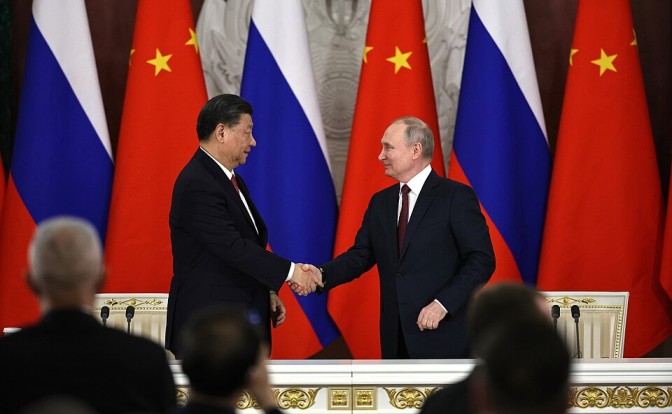
In a significant diplomatic development, Chinese President Xi Jinping and Russian President Vladimir Putin have agreed to extend the China-Russia Treaty of Good-Neighborliness and Friendly Cooperation. This decision was made during a meeting held at the Great Hall of the People in Beijing, marking the conclusion of Putin’s two-day state visit to China. The leaders pledged to enhance political mutual trust, strategic coordination, and practical cooperation amid the current global uncertainties. The two presidents signed a joint statement to strengthen their comprehensive strategic partnership and witnessed the signing of 20 cooperation documents across various sectors, including economy, trade, education, and science and technology.
This year is notable as it marks the 30th anniversary of the China-Russia strategic partnership and the 25th anniversary of their treaty of cooperation. President Xi highlighted the unprecedented level of this bilateral relationship, emphasizing its role in promoting international fairness, justice, and a new type of international relations. He urged both nations to continue supporting each other on core interests and to maintain strategic communication to consolidate political mutual trust. The two countries have seen their bilateral trade exceed $200 billion for three consecutive years, with trade increasing nearly 20 percent in the first four months of 2026.
President Putin, during his visit, expressed confidence in the future of Russia-China relations, noting their self-sufficiency and independence from the current international climate. He affirmed Russia’s commitment to deepening the partnership and contributing to the development and revitalization of both countries. Putin also emphasized the importance of upholding international law and collaborating within frameworks like the Shanghai Cooperation Organization and BRICS to address global challenges.
Both leaders discussed global governance issues, emphasizing the need to oppose unilateral actions and uphold the authority of international bodies such as the United Nations. They called for a more just and equitable global governance system, particularly opposing actions that undermine the outcomes of World War II. Additionally, China announced an extension of its visa-free policy for Russia until 2027, with Russia reciprocating for Chinese citizens.
During their talks, Xi and Putin also addressed critical international issues, including the situation in the Middle East, advocating for an immediate end to hostilities and a focus on negotiations. Xi noted that resolving conflicts in the Middle East is crucial for maintaining global energy supply stability and the international trade order. The visit concluded with Xi hosting a welcoming banquet in honor of Putin, underscoring the deepening relationship between the two nations.