
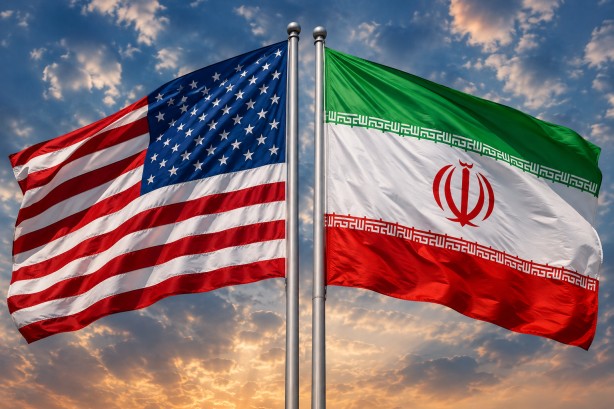
Amid rising tensions, the United States and Iran have engaged in their most intense military exchanges since a temporary ceasefire was agreed upon last month. The United States launched a series of airstrikes targeting approximately 80 sites associated with Iran’s military capabilities, asserting that the action was necessary to mitigate threats to navigation freedom in the vital Strait of Hormuz. This military action followed Iran’s attack on three commercial vessels traversing the strategic waterway.
In retaliation, Iran fired missiles and deployed drones against U.S. military installations in Bahrain and Kuwait, while also unveiling a new military policy that categorizes the United States and its regional allies as equivalent adversaries in potential future conflicts. President Donald Trump issued a warning that the U.S. is ready to execute further military actions if Iran persists with its aggressions. Despite the heightened tensions, Trump expressed confidence that the situation would not escalate into an extended conflict.
The recent hostilities cast doubt on the durability of the ceasefire, which was originally intended to facilitate negotiations concerning Iran’s nuclear ambitions, potential sanctions relief, and long-term security in the Strait of Hormuz. Both nations hold divergent views on control over the waterway, with Iran asserting its right to regulate shipping and the U.S. contending that attacks on commercial vessels breach international maritime security, thus justifying its military response.
The escalation of military actions has led to a surge in global oil prices, as fears mount over possible disruptions to the Strait of Hormuz, a critical artery for the world’s energy supply. This development underscores the fragile nature of the truce and the intricate geopolitical dynamics at play, with broader implications for regional and global security.