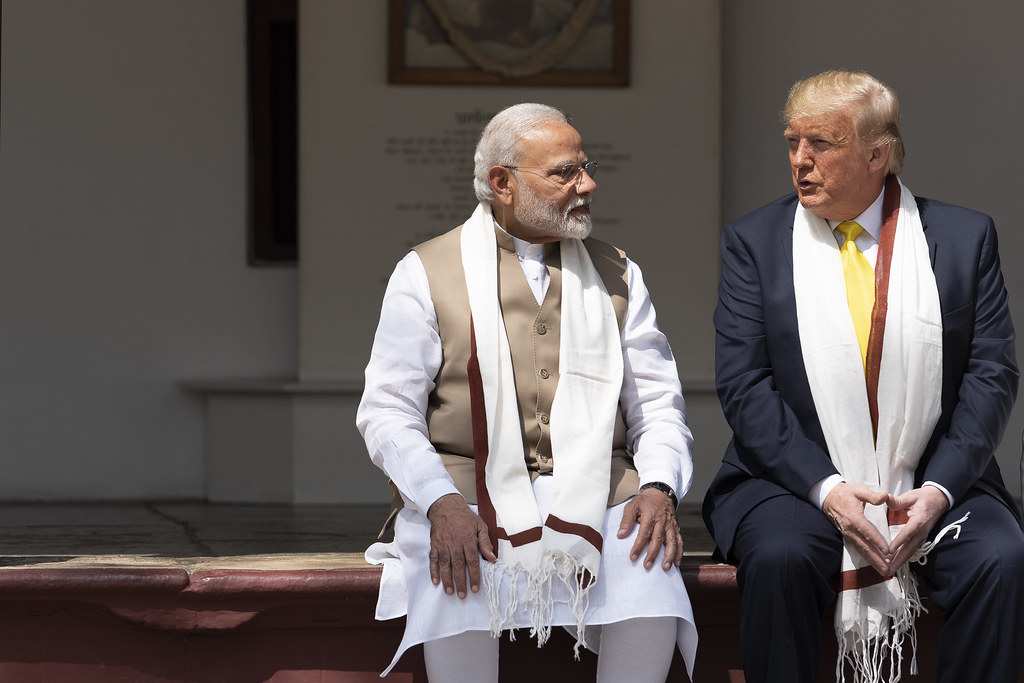
The full weight of US President Donald Trump’s trade policies has fallen upon India, with the announcement of a 25% tariff on Indian goods, effective August 1. This impactful tariff is accompanied by an unspecified “penalty,” which Trump explicitly stated is a direct consequence of India’s ongoing procurement of arms and energy from Russia, linking the economic action to the war in Ukraine.
Despite labeling India a “friend,” Trump used his Truth Social platform to sharply criticize India’s trade policies. He pointed to a “massive” trade deficit with the US and “far too high” tariffs on US imports as key drivers of his decision. This move heightens global trade tensions, particularly as Washington nears its August 1 deadline for countries to finalize trade agreements.
Trump further condemned India’s “strenuous and obnoxious” non-monetary trade barriers, underscoring his administration’s determination to recalibrate international trade relationships. Unlike the EU, Japan, Vietnam, and the UK, which have recently reached trade deals to limit tariff hikes, India now faces a harsher stance, reflecting Trump’s resolve to exert pressure on Moscow through economic means.
With US goods trade with India estimated at $129.2 billion in 2024, and a $45.7 billion deficit, this tariff imposition marks a critical juncture in Indo-US economic relations. The “penalty” for Russian ties signals a broadening of Trump’s trade leverage to include geopolitical considerations, forcing nations to align more closely with US foreign policy objectives.